

Understanding Solar Inverters
The inverter makes solar electricity useful in your home. It converts direct current (DC) from solar panels or batteries into the alternating current (AC) used by household appliances.
Grid-tied, hybrid and off-grid inverters serve different needs. Choosing the right one starts with understanding how you want to power your home.
Grid-Tied Inverters
A grid-tied inverter works alongside your utility supply, helping solar panels power your home during daylight.
- Use solar power at home: Solar production can reduce the electricity you buy from the utility.
- Export surplus power: Where approved by your utility, extra production can be sent to the grid.
- Understand the outage limitation: A conventional grid-tied system shuts down during a power outage to prevent electricity from feeding back onto utility lines.
Sunshine on the panels does not automatically mean you will have electricity during a blackout. Backup power requires equipment designed for that purpose.
Hybrid Inverters
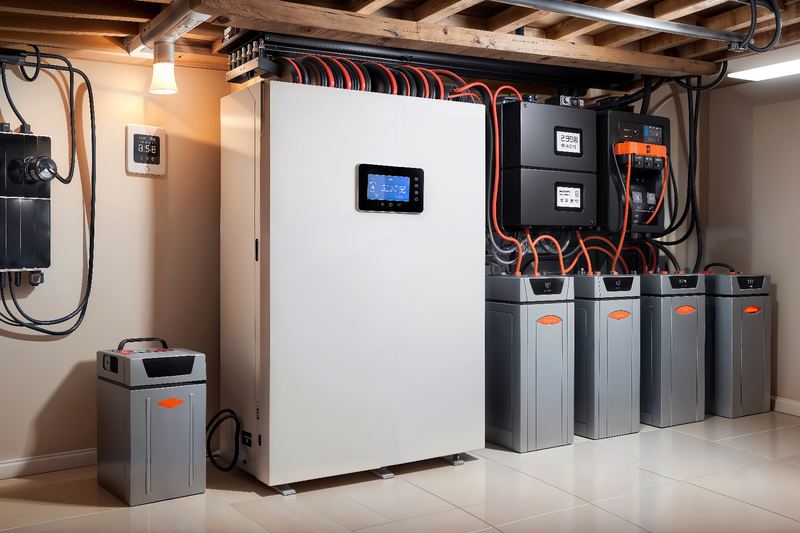
A hybrid inverter brings solar panels, batteries and other power sources together. Its capabilities depend on the model and how the system is installed.
- Store solar energy: Batteries make energy available after sunset or when production falls.
- Provide backup power: A properly configured system can supply selected circuits—or a larger portion of the home—during an outage.
- Work with other sources: Depending on the equipment, the system may accept utility power, generator power or both.
- Support off-grid living: Some hybrid models can operate without a utility connection.
The inverter determines how much equipment can run together. Battery capacity and available charging determine how long it can run.

Off-Grid Inverters
An off-grid inverter supplies household electricity without a utility connection. It forms part of a system designed around your home, your energy use and the sunlight available at your location.
- Power everyday appliances: Choose an inverter that can handle the equipment you expect to use together.
- Handle starting loads: Pumps, refrigerators and other motor-driven equipment may need a brief burst of extra power to start.
- Work with battery storage: The battery bank must supply both everyday demand and those short starting loads.
- Include generator support: A generator can provide charging during extended cloudy weather or periods of heavy use. Compatible equipment can also automate starting and stopping.
Planning for Canadian winter conditions helps keep the system practical throughout the year.
The Batteries Are the Heart of the System
Batteries store energy for use after sunset and whenever solar production falls short.
- Storage capacity affects how long you can operate between charges.
- Power delivery must be sufficient for the inverter and the appliances it supplies.
- Temperature requirements influence battery choice and where the bank should be installed.
We’ll help size your battery bank around your daily use, charging sources and the reserve you want available.
The Inverter — Power for the House
Choosing an inverter involves more than comparing the largest wattage printed on the box.
- Continuous output: Enough power for the appliances you want running at the same time.
- Starting surge: Extra power to start equipment such as a well pump.
- Output voltage: The correct supply for your home, including 120/240-volt service where needed.
- Room to grow: Capacity for reasonable future additions.
- Its own consumption: The inverter also uses energy while operating, which matters in a home powered from batteries.
A larger inverter can run more equipment, provided the batteries can support it. It does not add stored energy or replace the need for enough solar charging.
Solar — Putting the Energy Back
Solar panels supply daytime power and replenish the batteries.
- Daily production varies: Season, weather, shading and panel placement all affect the harvest.
- Winter needs attention: Shorter days and snow cover can reduce the energy available.
- Charging must match consumption: The system needs a practical way to replace the energy your home uses.
We plan the array, batteries, inverter and generator together so each part can do its job.
Think of It Like a Vehicle
The parts of an off-grid system are easier to understand when you compare them with a vehicle:
- Solar panels are the fuel pump: They bring energy into the system.
- Batteries are the fuel tank: They hold energy until you need it.
- The inverter is the motor: It turns that energy into useful power for your home.
A bigger motor does not give you a bigger fuel tank. Likewise, a larger inverter does not make the batteries last longer. The whole system needs to suit the job.
And What About the House?
An off-grid home can have familiar appliances, lights, computers and everyday comforts. Good planning starts with what you want to use, including well pumps, kitchen appliances and workshop equipment.
Before you order, we’ll help you understand the equipment choices, charging arrangements and installation work involved. Household wiring, protection and installation must still meet applicable electrical requirements.
Tell us how you want to live, and we’ll help work out the power system to suit. Advice is free.