“I don’t know much about solar.” We hear that a lot. Pull up a chair—we’ll help you find the right questions, understand your options and feel more confident about your plans.
The Solar Blog
Advice is free. Curiosity is welcome.
If you haven’t found an answer here, ask us. Your question may become an article that helps someone else, too.
Getting away from it all shouldn’t mean giving up the comforts you enjoy. Whether it’s a lakeside cabin, a hunting retreat, or a quiet place in the woods, the Solarwyse Weekend Warrior Series brings dependable off-grid electricity to your favourite escape. Designed for seasonal and recreational use, these systems combine solar panels, battery storage, and intelligent inverter technology to provide power when and where you need it. From keeping the lights on and the refrigerator cold to enjoying a home-cooked family dinner, your weekend retreat can be as comfortable as you choose.
Leave the crowds behind, not the comforts of home.
The lights are on. Time to settle in.Breakfast together at the cabin.
Off-Grid Power for Your Weekend Away
The lights are on, the cabin is welcoming and your weekend can begin. The Weekend Warrior Series brings off-grid power to cabins, cottages, hunting camps and occasional retreats.
Whether you want to charge phones and rechargeable lights, keep a small fridge cold or run a water pump for a shower, we’ll design around what you use and how long you stay.
These systems supply 120-volt AC power only. Your appliances must suit that supply, including a 120-volt water pump. How many items you can run at once depends on the inverter, battery and the starting demands of your equipment.
Power for the Way You Visit
Solar can recharge your batteries between visits, helping you make the most of your time away. Suitable systems can also use generator charging during longer stays or cloudy weather. Recharge time depends on the battery bank, charger, generator and power being used.
Choose a prewired package for less assembly on site, a modular Victron system or individual components for experienced installers. Prewired options include 3,000-watt packages.
Remote monitoring is available with suitable equipment and an internet connection, so you can check your system from home.
What Happens Next?
Tell us what you want to power, how often you visit and what equipment you already have. We’ll help you choose an inverter, battery bank and solar array that work together for your weekend plans.
You’ll know what comes with the package, what must be supplied locally and what installation work remains. And when you have questions, Solarwyse is here to help.
Our easiest installation option is an SRNE package ordered prewired and mounted on a back panel, with battery cables and a breaker already installed. It reduces assembly and wiring on site, while still requiring final connections and installation.
Victron offers a modular system assembled around your needs. A compatible VE Panel brings manual disconnects, protection and connection points together; the inverter remains a separate component. It provides a practical foundation with room for future additions.
For small charging needs, a removable, single-outlet Kisae option can serve phones, rechargeable lights and similar items. It requires a separate battery and charge controller.
We also supply individual components for experienced installers, including qualified electricians. We’ll help select compatible equipment; the installer supplies the required interconnecting wiring and completes the assembly.
What You’ll Supply Locally
Additional TECK90 cables are required, with cable sizes and lengths determined by your equipment and installation. We’ll identify the wiring, terminations and protection included in the package and what your installer must supply locally.
Some models provide power through an outlet; others may connect to a cabin’s distribution panel. Not every model supports a panel connection, so we’ll confirm this before you order. All battery connections and fixed wiring need suitable cables, protection and installation that meets applicable electrical requirements.
Will It Run What You Need?
A Weekend Warrior system can run many everyday 120-volt appliances when loads are managed within its capacity. A 120-volt washer or gas dryer may also be possible, depending on its running load, starting demand and the energy available. We’ll check your equipment rather than promise that everything can run together.
If you need 120/240-volt power, a suitably selected transformer may be an option, but it does not add power or battery capacity. The Homestead Series is usually a better starting point for those needs or for planned growth.
Homestead can begin with a modest battery bank and an inverter selected for possible future loads. It can stay small if your needs stay small, or expand as life changes—helping protect your original investment.
Questions are welcome
You don’t need every answer before you begin.
You don’t have to be buying solar to ask a question. Understanding builds confidence. Advice is free.
Every journey toward energy independence begins with a solid foundation. The Solarwyse Homestead Series is designed for homeowners who want to take greater control of their electricity, whether they’re connected to the utility grid or planning a completely off-grid lifestyle. Starting with solar generation and intelligent hybrid inverter technology, each system can be tailored to your energy needs, your property, and your future plans. Battery storage is optional for grid-connected systems but essential for off-grid living. Whether you’re starting small or preparing for a larger system, Solarwyse helps you understand your options and build with confidence.
Start with sunshine. Build toward freedom.
A place of your own, with room to grow.
Your Plans. Your Place. Power to Get Started.
Making a place your own takes work, imagination and a practical starting point. Whether you’re building a home, setting up a workshop or settling onto an acreage, the Homestead Series helps bring off-grid power into the picture.
You don’t need to build the final system on day one. We’ll plan around today’s needs while considering what you might want later.
Start with What You Need
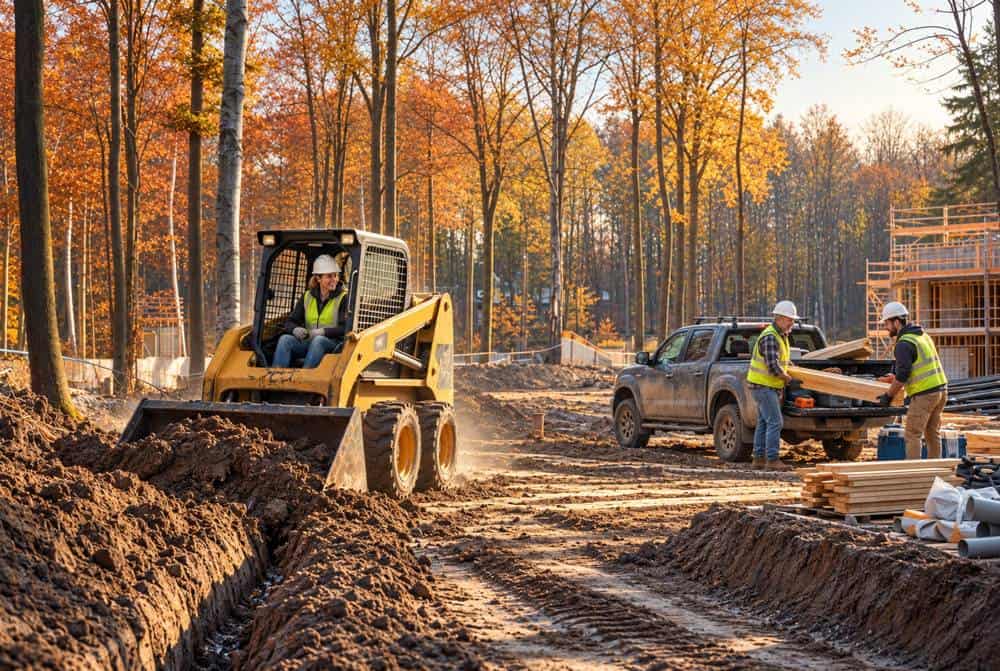
During construction, a generator, inverter and battery bank can supply selected loads while your property takes shape. Solar panels can be included from the start or planned as a later addition.
A modest battery bank may be enough at first. Choosing an inverter with room for future loads can help avoid replacing it later, provided the battery, charging and wiring arrangements support those loads.
Plenty of Options—and Help Choosing
From Victron component systems to Megarevo and Sol-Ark inverter options, there are several ways to build your system. We’ll compare the features that matter to your project, including the required output voltage and generator charging.
Already own equipment? Tell us what you have. Where it is compatible and practical, we’ll help you put it to use.
Solar Packages to Suit Your Property
Solar panels, mounting and battery capacity are selected around your site, energy needs and budget. Six- and eight-panel top-of-pole packages are among the available options.
Your quotation will identify the panels, MC4 cables, combiner, breakers and battery or inverter cables included. Remote monitoring is available with compatible equipment and connectivity.
Choose the Right Level of Installation Help
Some customers want to assemble individual components; others prefer more of the work completed in advance. We’ll help you choose an approach that suits your experience and explain what remains for your installer.
Battery connections, fixed wiring, protection and inspections must meet the equipment instructions and applicable electrical requirements. Practical confidence is useful; correctly specified wiring is essential.
What Happens Next?
Tell us what you want to run now, what may come later and any equipment you already own. We’ll explain the choices and the limits of the starting system, so you can make a decision with a clear path forward.
The Homestead Series can remain a small system for as long as that suits you. Its value is in planning ahead, rather than requiring you to expand.
The inverter’s rating determines the loads it can supply at one time; usable battery storage determines how long energy is available between charges. Solar generation and generator charging must keep pace with use.
For essential equipment such as a CPAP, tell us the model and operating needs so backup arrangements can be considered explicitly.
A Comfortable Starting Point
A modest home or permanent cabin may need only a small battery bank and a suitable solar array. We’ll match the output voltage to your equipment, including water and sewage pumps, and explain what can operate together.
If your needs never increase, there is no reason to expand simply because the system can.
Building a new home in the country.
Build with Future Loads in Mind
A larger inverter can provide headroom without requiring a large battery purchase immediately. The starting bank must still meet the inverter’s requirements and support the loads you intend to use.
When expansion is needed, compatible storage and solar capacity can be added within the design limits. We’ll consider generator charging, site wiring and equipment locations from the beginning. Plan underground cable routes before landscaping.
Family life and autumn chores at home.
When the Property Becomes a Full-Time Home
The Canadian Home Series develops the same approach into a complete everyday power plan.
Battery storage and solar generation are sized around expected daily use and the desired time between charges, with suitable generator backup for poor solar conditions.
What You’ll Supply Locally
Additional site wiring, typically TECK90 between equipment, is supplied locally. Cable lengths depend on where you place the array, inverter, batteries, generator and electrical panel.
We’ll identify the required connections and what your quotation includes. Cable sizing, terminations, protection and installation must meet the equipment instructions and applicable electrical requirements.
Let’s Talk About Your Home
Tell us about your property and the life you want to build there. We’ll help you start with what you need and plan ahead without buying everything at once.
Questions are welcome
You don’t need every answer before you begin.
You don’t have to be buying solar to ask a question. Understanding builds confidence. Advice is free.
A home needs power every day. We bring solar generation, battery storage, inverter capacity and backup charging together around the way your family lives.
Comfort through the seasons. Energy for generations.
A complete plan for everyday living
Start with your routine, then choose the equipment.
Refrigeration, water pumping, laundry, communications and the busy parts of the day all belong in the design. We look at what you use, when you use it and which loads may start together.
An off-grid home needs batteries for nights and periods of limited sunshine. A grid-connected hybrid system may have optional storage, but keeping selected loads running during an outage needs a suitable backup arrangement.
Three questions. Three different answers.
What can run together?
The inverter’s output and starting capacity, supported by the batteries.
How long can it run?
Usable battery energy and the rate your household uses it.
How will energy be replaced?
The solar array, seasonal sunshine and suitable backup charging.
We consider daily use, overnight needs, cloudy-weather reserve and the battery’s operating limits. Battery location and temperature requirements matter.
A practical charging plan
Short winter days, snow and shading change the solar harvest. A compatible generator and charger can support the system when sunshine falls short.
Clear priorities
We discuss which loads matter most, what can wait and how much generator operation you’re comfortable with. Essential equipment needs an explicit backup plan.
We compare inverter choices, including Megarevo and other compatible options, around the features you’ll actually use. Output voltage, starting demand, charging inputs, monitoring and the inverter’s own energy use all matter.
A larger wattage on the box doesn’t add stored energy. We select the batteries, array and charging capacity together rather than promise that everything can run at once.
An easy step from Homestead—when planned for it.
With a suitable inverter and wiring already in place, expansion may mean adding compatible batteries and panels. We check model limits, battery compatibility and installation requirements before you buy.
Inverter model, output voltage and supported loads.
Battery type, usable capacity and location needs.
Solar panels, mounting and expected seasonal limitations.
Generator compatibility and charging arrangements.
Included protection, cables and connections.
Locally supplied wiring, installation and inspection work.
Site cable lengths depend on the installation. Cable type and size, distribution-panel work and protection must suit the equipment and applicable requirements. We work with you and your electrician.
The next step is a conversation
Tell us a little about your home.
Your placeLocation, year-round or seasonal use, and any utility connection.
Your routineAppliances, pumps, daily energy use if known, and what must stay on.
Your plansExisting equipment, future additions, budget and timing.
You don’t need to have the numbers worked out. We’ll help you ask the right questions before you commit.
Questions are welcome
Let’s talk about the home you want to power.
You don’t have to be buying solar to ask a question. Understanding builds confidence. Advice is free.
Your plans might begin with a weekend cabin, a home under construction or a household ready for everyday living. Start where you are. We’ll help with the choices.
Each package is planned around your loads, storage needs, location and budget. Off-grid systems need batteries. Grid-connected hybrid systems may be configured without batteries, but backup power needs suitable equipment and storage.
A cabin may become a permanent home. Or your modest system may remain all you need. We’ll consider expansion without expecting you to buy it.
Personal support is part of the plan.
Phone and remote assistance are free. Compatible monitoring needs suitable equipment and connectivity.
For agreed on-site visits supporting a Solarwyse system purchase, guidance and instruction are normally provided without a charge for that time. Customers cover agreed fuel, meals and accommodation. Scope and expenses are discussed beforehand; additional work is arranged separately.
A home at the end of a country lane can have a comfortable kitchen, running water, laundry, internet and lights to welcome you home. Living off-grid means supplying your own electricity to make those things possible, rather than relying on a utility connection.
Solar panels collect energy, batteries store it for later, and an inverter supplies household electricity. A generator can provide support during extended cloudy weather and the short days of a Canadian winter. Water and sewage may also be handled on site, as they are on many rural properties.
The starting point is how you want to live. A seasonal cabin, a busy family home and a retirement acreage have different needs. The appliances you choose, when you use them and how much generator operation you’re comfortable with all help shape the system.
At Solarwyse, we live with these decisions ourselves. We’ll help you understand the choices and plan equipment that suits your property, your daily routine and your budget—with practical support as your project takes shape.
The Salesman Promised More Free Time
I remember the electrical salesman arriving at our family farm, promising easier chores and more free time. Our first transformer was only 3 kW, but it opened the door to conveniences we hadn’t had before.
The convenience was real. But as appliances arrived and we found more uses for electricity, our expectations grew. The 3 kW transformer became 5 kW, then 10 kW. Each increase let us do more—and gave us more equipment to buy, run and look after.
We still had hay to put up. Horses or a small tractor pulled the wagon, but the loose hay went aboard by pitchfork and was unloaded into the barn loft. Electricity brought welcome conveniences, but there was still plenty of work waiting for us.
I’m still looking for all the free time the salesman promised.
That experience has stayed with us at Solarwyse. When planning an off-grid home, it helps to look beyond the first few lights and outlets. What will you want to power today? What might you add later? And what will those choices ask of the batteries, solar array and generator?
Our job is to help you understand those decisions, so the conveniences you choose are supported by a system planned to run them.
Dad said the neighbour girl driving the tractor made us boys work harder
Planning Power for Your Off-Grid Home
What Size Inverter?
Your inverter needs to supply the appliances you use together and handle the extra starting demand of equipment such as pumps and refrigerators.
We’ll look at your appliances, daily routine and future plans. The inverter, battery bank and charging system need to work together, so you have useful capacity where you need it.
How Much Solar?
Your solar array needs to power daytime use and replenish the energy drawn from the batteries. We size the array and battery bank together, allowing enough charging power and daylight for the job.
Having the batteries charged by noon on a good solar day is a useful planning goal: it leaves afternoon sunshine for jobs such as vacuuming or laundry. Canadian winter days are a different matter. We’ll plan solar and backup charging around your location, seasonal sunlight and daily routine.
How Much Battery Storage?
Think of the battery bank as your stored fuel supply. Its usable capacity determines how much energy is available overnight and between charging opportunities.
We’ll consider your daily use, the reserve you want for cloudy weather and the batteries’ operating limits. Storage must be large enough to meet your needs, with a charging system capable of replenishing it. The bank must also supply the current your inverter requires.
What Else Is Needed?
The complete installation includes correctly sized cables, suitable terminations, disconnects, over-current protection and the required switching and grounding arrangements.
Your quotation will identify included equipment and locally supplied items. Installation must follow equipment instructions and applicable requirements, with qualified help where needed.
Solarwyse support helps you understand the equipment and make informed decisions as the project takes shape.
The lane leading to our off-grid home.
A Look Inside Our Off-Grid Home
Come down the lane and you’ll find a home with the everyday conveniences we enjoy. Living off-grid has encouraged us to understand how our appliances use energy and choose them accordingly.
A gas appliance may still need electricity. Oven igniters, controls, fans and dryer motors can add meaningful loads, even when the heat comes from propane. Model details matter.
Refrigerators, freezers and other appliances cycle on and off. Their starting demands and daily energy use are different questions, and both belong in the design.
Our home has running water, a dishwasher, laundry and internet access. Generator charging supplements solar when winter daylight or extended cloudy weather limits production.
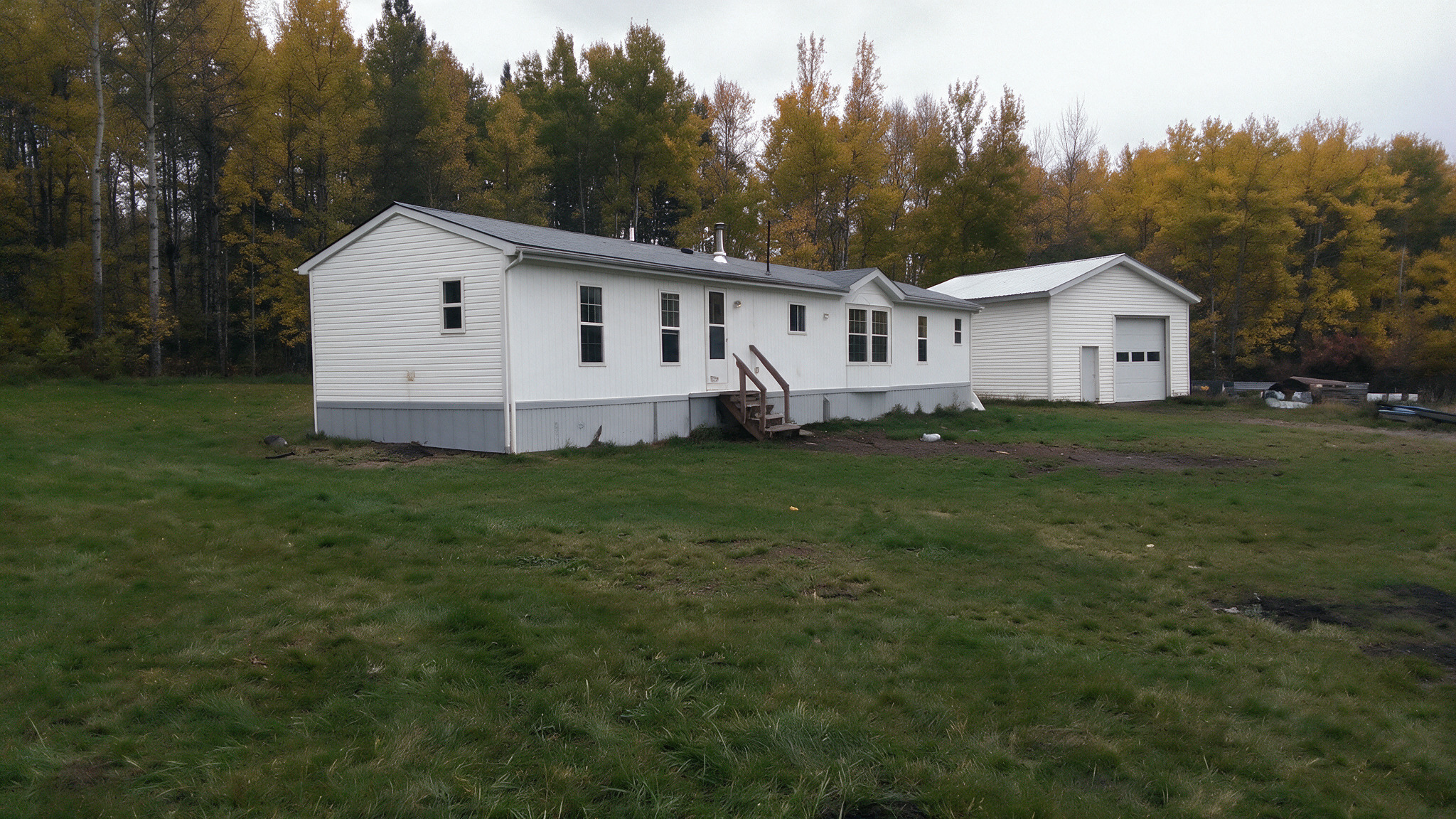
Our mobile home and workshop, powered off-grid.
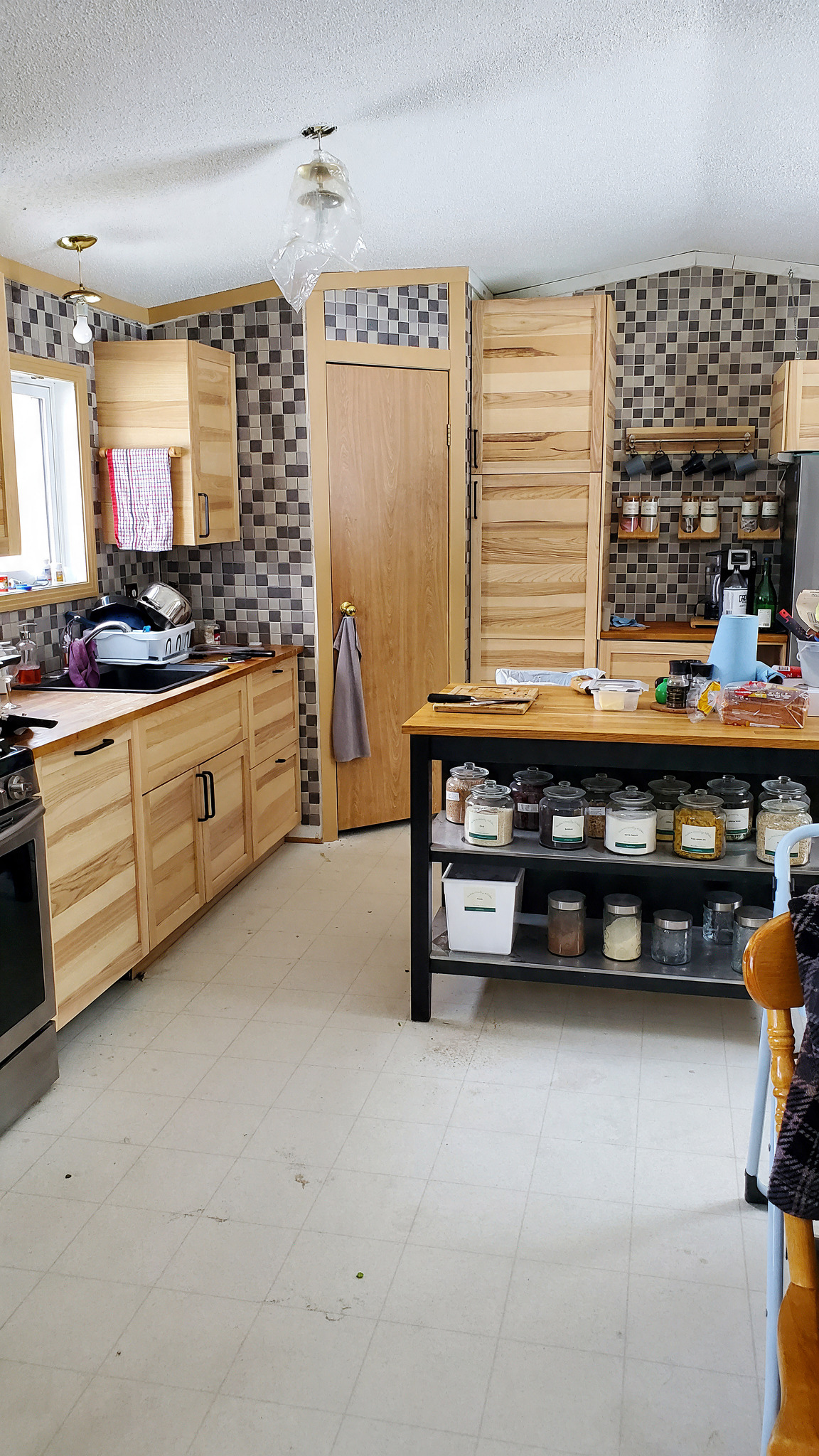
Our off-grid kitchen—with the everyday comforts of home.
Off-Grid Kitchen
The kitchen shown here is in our off-grid mobile home. The appliances were selected for efficiency, suitability and price, rather than for a particular brand.
We use a propane stove, a microwave with an extractor fan, a counter-depth refrigerator and a built-in dishwasher. Our front-loading washer is paired with a propane dryer. Well water comes from a submersible pump, and LED lighting helps keep electrical use down.
Our typical consumption has been around 10 kWh per day, though every household is different. In winter, the generator supplements the shorter solar days.
The point is not that every off-grid home should copy ours. It is that everyday comfort is possible when the equipment and energy supply are planned together.
Why Solarwyse?
Personal Help, Practical Knowledge
Choosing an off-grid system is only the beginning. Understanding the equipment and knowing how to operate it makes a lasting difference.
Sometimes a phone call is all it takes to explain a setting, answer an installation question or help work through a problem. We can assist you and your local electrician by phone, with practical guidance as your project takes shape.
On site, we work alongside you and your electrician, explaining how the components work together and sharing installation tips and safe working practices. Our aim is to help you build the knowledge and confidence to use your system every day.
On-Site Guidance, Personally Arranged
Passing along practical knowledge is a rewarding part of our work. When an on-site visit would help you and your electrician get started, we can discuss an arrangement that suits the project.
For agreed visits supporting a Solarwyse system purchase, we normally provide installation guidance and instruction without a charge for that time. Customers cover the agreed travel expenses, including fuel, meals and accommodation.
We discuss the scope of the visit, its length and expected expenses beforehand. Additional work or extended support is arranged separately, so everyone knows what is included.
It’s a personal approach built on mutual respect, practical learning and helping you get started with confidence.
Planning your own off-grid home? Tell us about your property, the appliances you want to run and how you’d like to live. We’ll help you work through the next steps. Contact Solarwyse or call 780-402-4376.
Questions are welcome
You don’t need every answer before you begin.
You don’t have to be buying solar to ask a question. Understanding builds confidence. Advice is free.
Your solar array is the starting point for off-grid power. It supplies electricity during the day and recharges the batteries for evening and overnight use. The right size depends on how much energy you use, where you live and the sunlight available throughout the year. Panel wattage alone does not tell the whole story—shade, direction, tilt and snow cover all affect what an array can produce. We’ll help you choose panels and a mounting arrangement that suit your property, your power needs and the seasons you plan to use the system.
Mounting for Canadian Conditions
A good mounting system makes the most of your sunlight and gives you practical access to the panels. For many Canadian off-grid properties, ground and pole mounts offer useful clearance above snow and easier access for inspection and maintenance. Fixed, vertical and adjustable mounts each have their place. The best choice depends on your available space, seasonal power needs, ground conditions and local wind and snow loads.
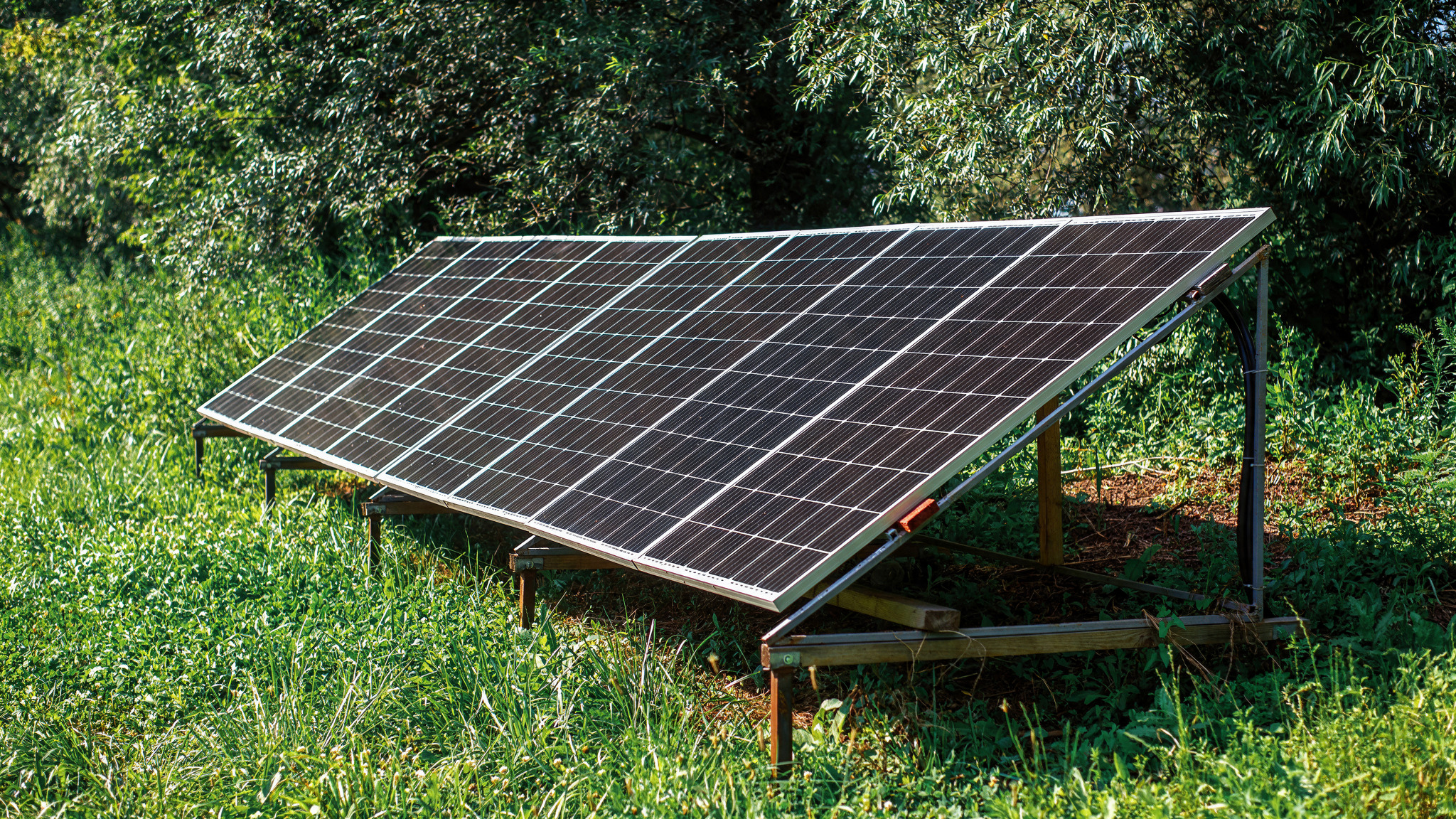
A fixed solar array for off-grid power
Fixed Ground Mounts
A fixed ground mount holds the panels at a chosen angle throughout the year. It is a straightforward option where there is enough open, unshaded space. Benefits and planning points
Simple construction with few moving parts
Accessible for inspection and cleaning when installed at a suitable height
Flexible placement away from buildings and shade
Leave enough clearance for snowbanks and vegetation
Choose the tilt to suit your location and seasonal needs
A fixed angle cannot follow the changing sun angle through the year
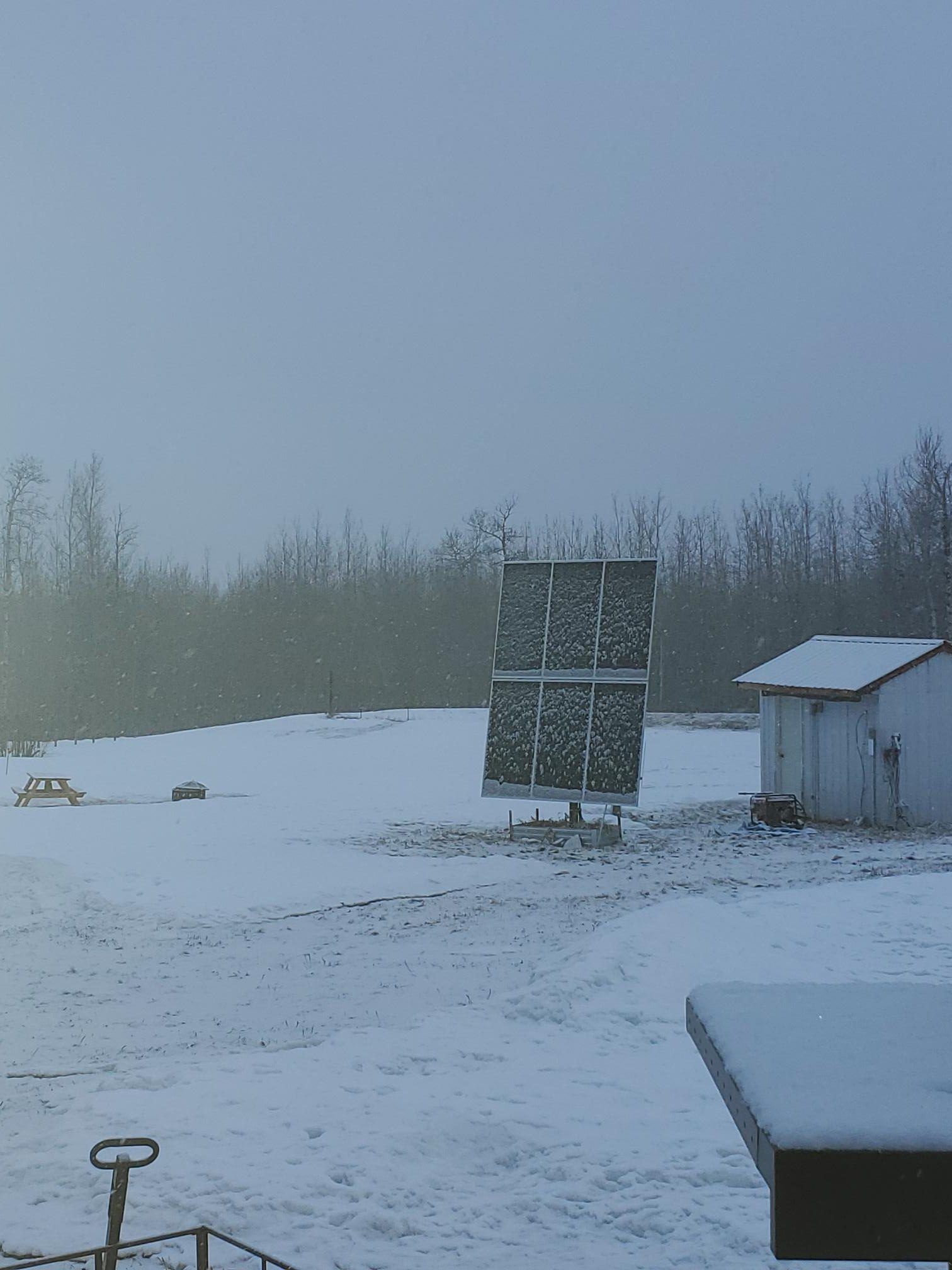
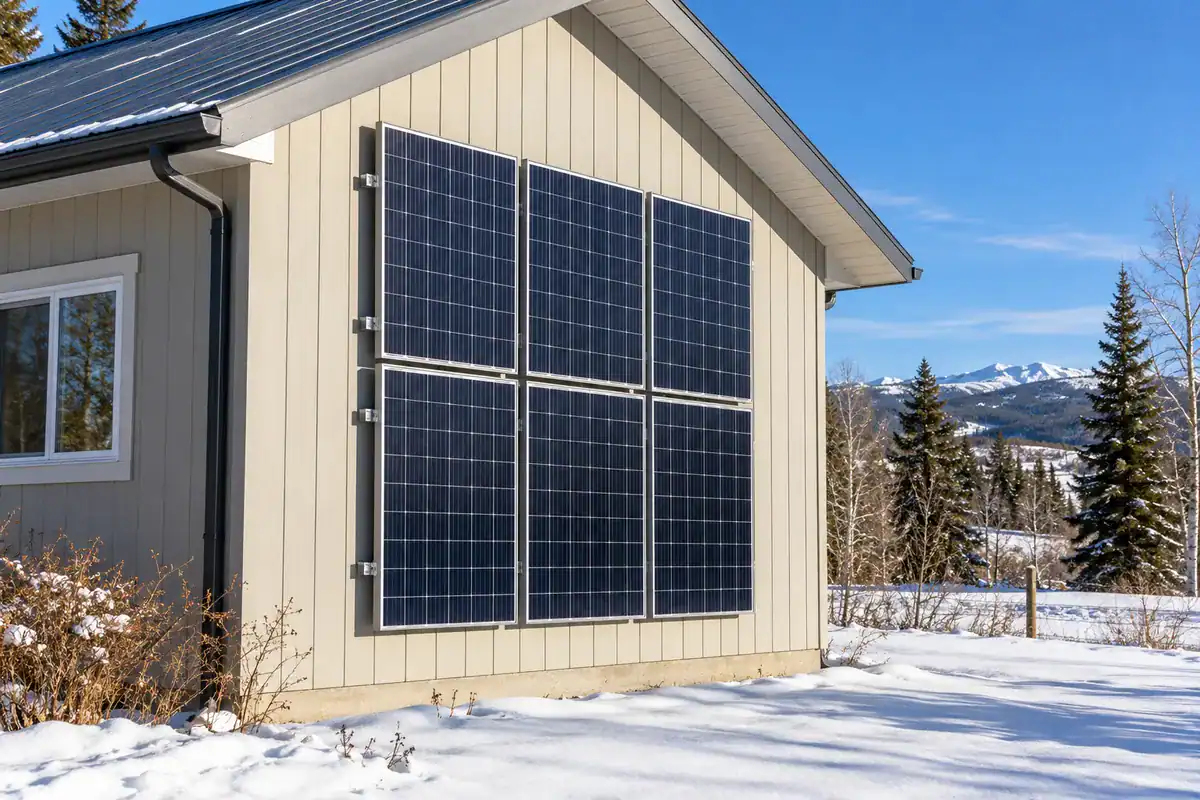
Mounted vertically for winter sun and reduced snow buildup.
Vertical Panel Mounting
Vertical panels can be a useful choice where snow accumulation is a concern. A suitable south-facing wall or purpose-built structure may provide a practical mounting location. Benefits and planning points
Less opportunity for snow to settle on the panel face
A useful option for the low winter sun
Reflected sunlight from snow can contribute to production
Vertical panels generally collect less summer energy than panels tilted toward the sun
Snowbanks and nearby objects can still shade the array
The supporting structure and mounting hardware must suit the panels and local conditions
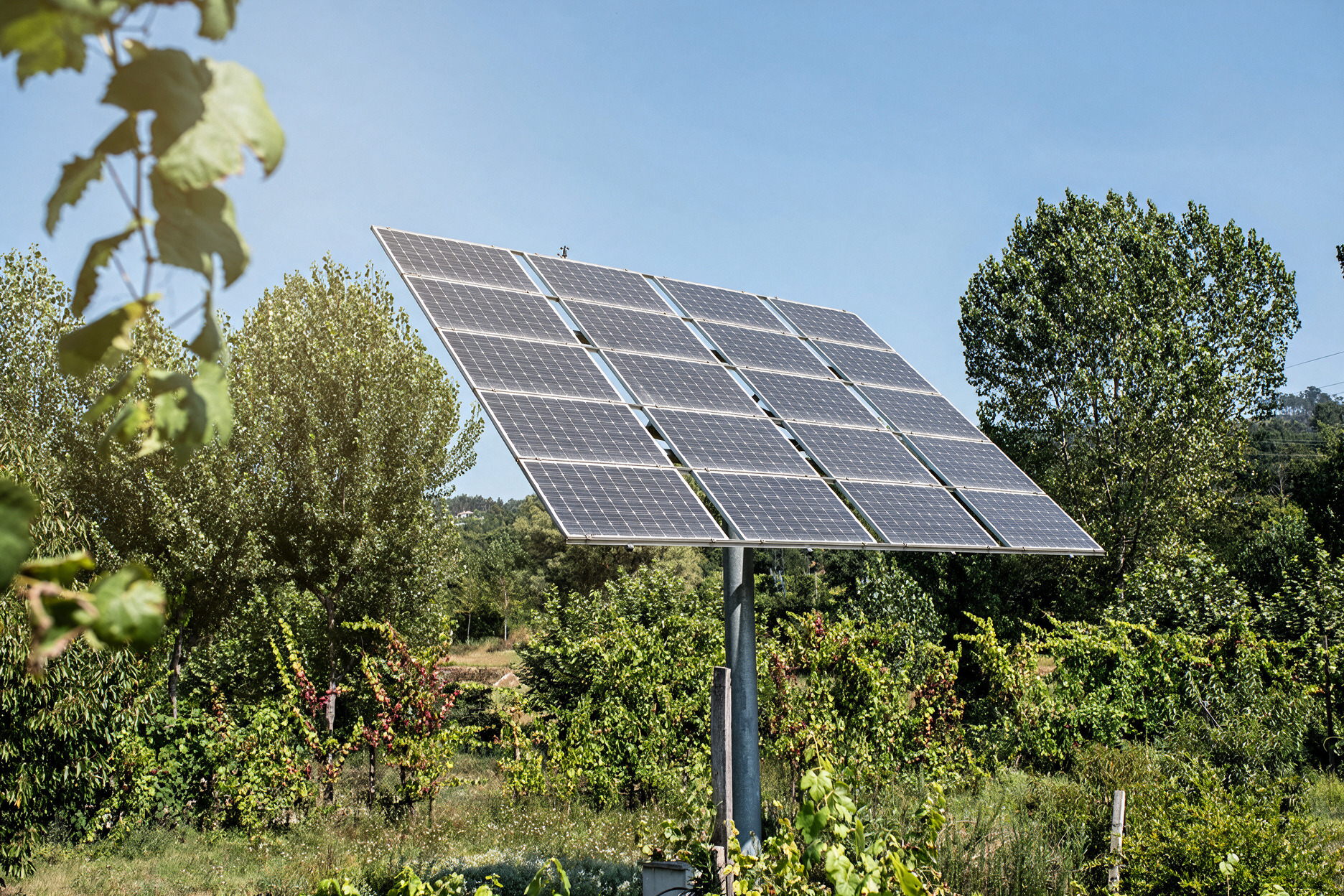
An adjustable top-of-pole solar array
Adjustable Top-of-Pole Mounts
An adjustable top-of-pole mount lets you change the panel tilt with the seasons. It raises the array above the ground and can provide a steep winter angle to help snow slide off. Benefits and planning points
A balanced array allows one person to adjust the tilt easily with the seasons
Raise panels above vegetation and typical snow levels
On suitable mounts, a near-vertical position can reduce snow buildup
The pole and foundation must be designed for the array and local loads
Installation and adjustment need safe access and suitable equipment
Snow and ice may still require attention
Let’s plan the array around your property. We can quote a top-of-pole package with panels, mounting hardware, wiring, grounding components and a combiner where required. Your quote will clearly explain what is supplied and what remains for foundations, site wiring and installation. For year-round off-grid living, we’ll also discuss winter production, battery capacity and generator backup for extended cloudy periods. Before you buy panels, talk to Solarwyse. We’ll help you work out what fits—advice is free.
Questions are welcome
You don’t need every answer before you begin.
You don’t have to be buying solar to ask a question. Understanding builds confidence. Advice is free.
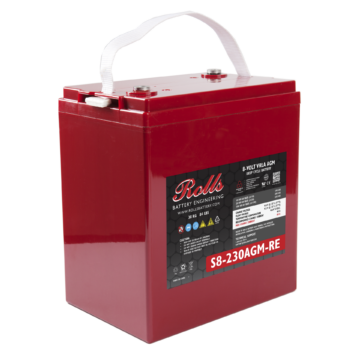
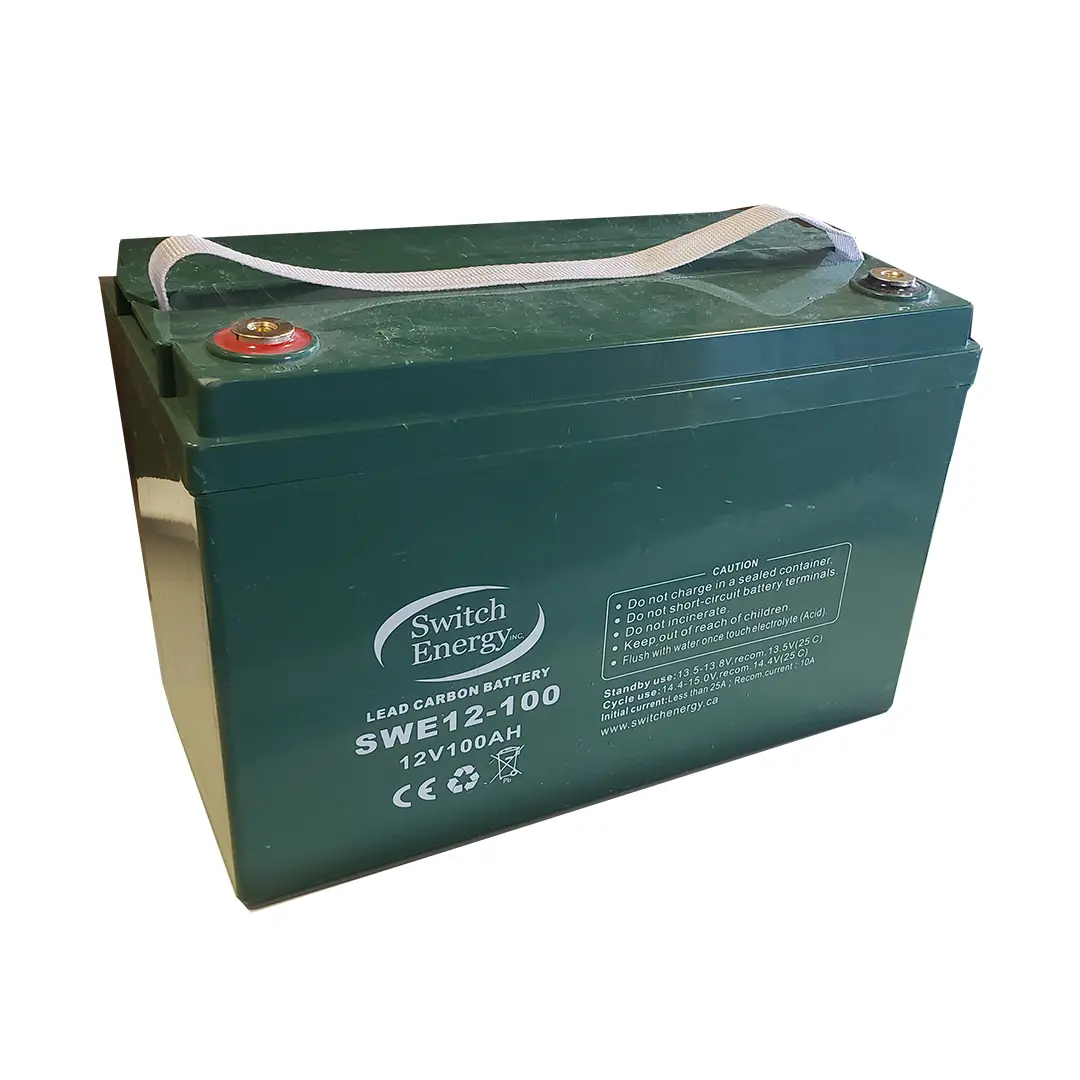
Your battery bank keeps power available after sunset and when the panels cannot keep up with demand. Choosing the right bank starts with how much energy you use, the equipment you run and how long you need stored power to last. We’ll help you compare AGM, lead-carbon and lithium options, looking at usable storage, charging requirements, winter conditions and overall cost. The aim is a battery bank that suits the way you live.
AGM Batteries
AGM stands for Absorbent Glass Mat, which holds the electrolyte—the liquid inside the battery—in place. These lead-acid batteries can be a practical choice for a cabin or cottage.
Advantages
No routine water topping-up
A familiar option for smaller off-grid systems
A range of sizes to suit different storage needs
Things to consider
Regular full charging helps limit sulfation, a buildup that reduces capacity
Repeated deep discharges can shorten battery life
The charger must use the manufacturer’s AGM settings
Size the bank for both your visits and periods when the property is unused
The battery bank’s voltage must match your inverter and charging equipment. Capacity must also be sufficient for the loads you expect to run.
AGM batteries can release gas if something goes wrong. They still need a suitable location and the ventilation required by the manufacturer.
Lead-Carbon Batteries
Lead-carbon batteries are lead-acid batteries with carbon added to the negative electrode. This helps them cope with partial charging when sunshine and charging conditions vary.
Advantages
Better suited to periods between full charges than conventional lead-acid designs
Some models offer improved charge acceptance—how readily they take a charge
Potential for longer cycle life, depending on the model and how it is used
Available in sizes for smaller off-grid systems and larger battery banks.
Things to consider
Still need proper charging and regular care
Weight, usable capacity and cold-weather performance vary by model
Compare cycle-life ratings at the same depth of discharge—the proportion of stored energy used each cycle
We’ll help you compare the ratings and choose a bank suited to your charging conditions and daily power use.
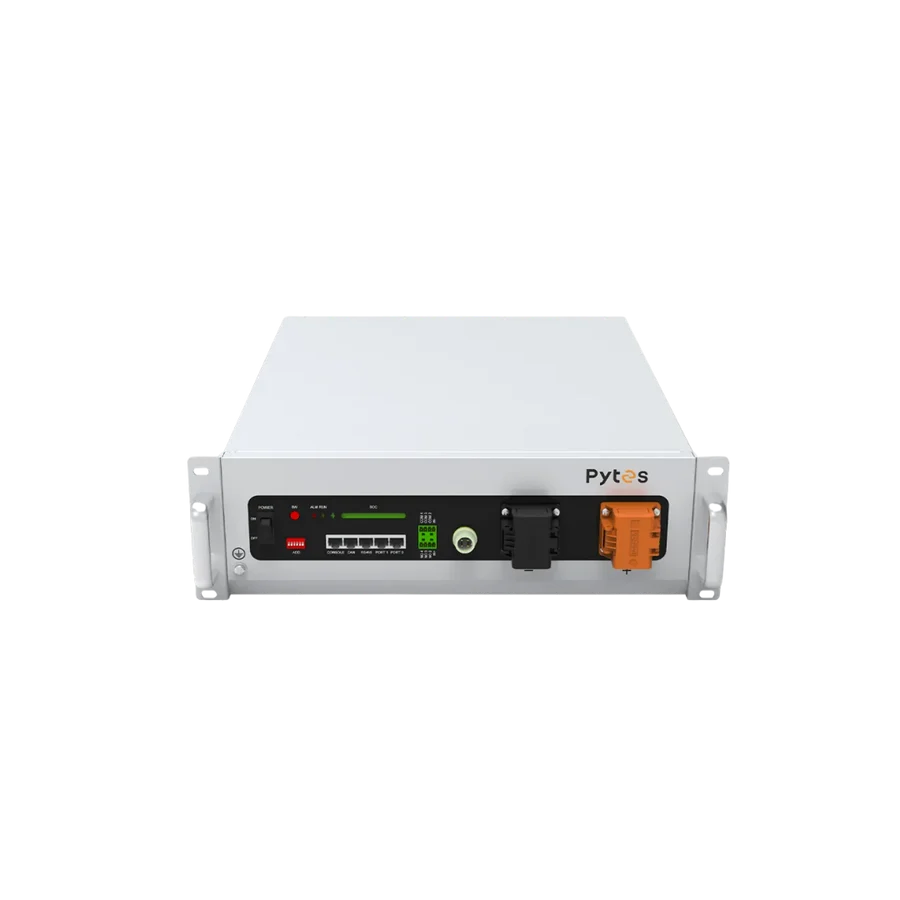
Lithium Iron Phosphate Batteries
Lithium iron phosphate (LiFePO4) is a common lithium battery type for off-grid homes. A battery management system (BMS) provides electronic protection against conditions such as overcharging and excessive discharge.
Advantages
A high proportion of rated capacity is usable within the manufacturer’s limits
Efficient charging and discharging
Many systems allow compatible batteries to be added later
Lithium batteries are often lighter than lead-based batteries with comparable usable storage, although larger modules still need suitable handling equipment.
Things to consider
Charging temperature limits vary by model
Some batteries have built-in heaters; others need a temperature-controlled space
Battery heating uses energy that must be included in the system plan
Check inverter compatibility and any BMS communication requirements
Compare complete installed costs, including heating and extra equipment
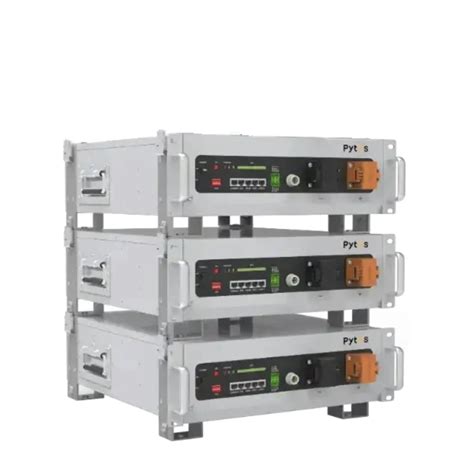
Three stacked Pytes lithium battery modules.
This Pyte stack shows how a modular battery bank can grow with your needs. Planning the space, wiring and compatible equipment at the outset can make future expansion easier. Additional batteries must remain within the manufacturer’s compatibility and system limits.
Where will your batteries live? The location matters as much as the chemistry. Choose a battery approved for the intended installation, and plan for its temperature, ventilation and weather-protection requirements. For an outdoor bank, insulation alone will not keep batteries warm through a Canadian winter. We’ll help you consider the complete arrangement before you buy. Tell us how you use power and what you want from your system. We’ll help you choose a battery bank that fits—advice is free.
Questions are welcome
You don’t need every answer before you begin.
You don’t have to be buying solar to ask a question. Understanding builds confidence. Advice is free.
The inverter makes solar electricity useful in your home. It converts direct current (DC) from solar panels or batteries into the alternating current (AC) used by household appliances. Grid-tied, hybrid and off-grid inverters serve different needs. Choosing the right one starts with understanding how you want to power your home.
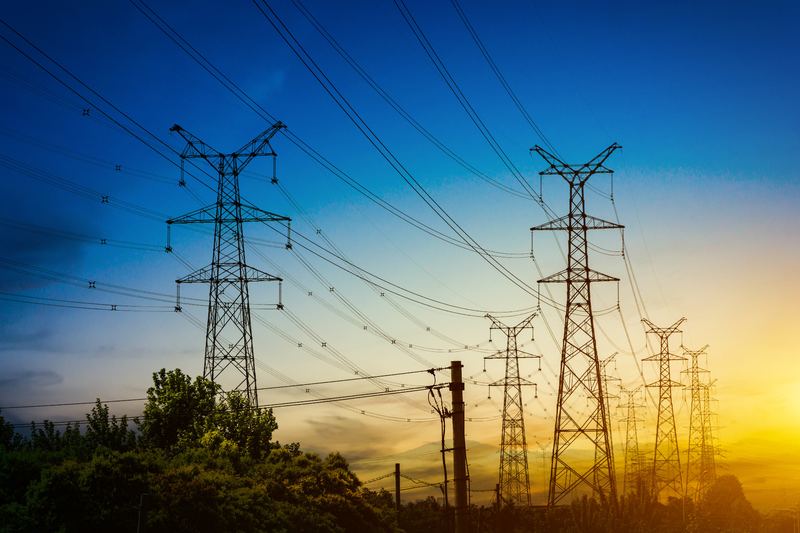
Surplus solar power can feed into the grid where approved by the utility.
Grid-Tied Inverters
A grid-tied inverter works alongside your utility supply, helping solar panels power your home during daylight.
Use solar power at home: Solar production can reduce the electricity you buy from the utility.
Export surplus power: Where approved by your utility, extra production can be sent to the grid.
Understand the outage limitation: A conventional grid-tied system shuts down during a power outage to prevent electricity from feeding back onto utility lines.
Sunshine on the panels does not automatically mean you will have electricity during a blackout. Backup power requires equipment designed for that purpose.
Hybrid Inverters
A hybrid inverter brings solar panels, batteries and other power sources together. Its capabilities depend on the model and how the system is installed.
Store solar energy: Batteries make energy available after sunset or when production falls.
Provide backup power: A properly configured system can supply selected circuits—or a larger portion of the home—during an outage.
Work with other sources: Depending on the equipment, the system may accept utility power, generator power or both.
Support off-grid living: Some hybrid models can operate without a utility connection.
The inverter determines how much equipment can run together. Battery capacity and available charging determine how long it can run.
Off-grid power brings electricity to homes beyond the utility lines.
Off-Grid Inverters
An off-grid inverter supplies household electricity without a utility connection. It forms part of a system designed around your home, your energy use and the sunlight available at your location.
Power everyday appliances: Choose an inverter that can handle the equipment you expect to use together.
Handle starting loads: Pumps, refrigerators and other motor-driven equipment may need a brief burst of extra power to start.
Work with battery storage: The battery bank must supply both everyday demand and those short starting loads.
Include generator support: A generator can provide charging during extended cloudy weather or periods of heavy use. Compatible equipment can also automate starting and stopping.
Planning for Canadian winter conditions helps keep the system practical throughout the year.
The Batteries Are the Heart of the System
Batteries store energy for use after sunset and whenever solar production falls short.
Storage capacity affects how long you can operate between charges.
Power delivery must be sufficient for the inverter and the appliances it supplies.
Temperature requirements influence battery choice and where the bank should be installed.
We’ll help size your battery bank around your daily use, charging sources and the reserve you want available.
The Inverter — Power for the House
Choosing an inverter involves more than comparing the largest wattage printed on the box.
Continuous output: Enough power for the appliances you want running at the same time.
Starting surge: Extra power to start equipment such as a well pump.
Output voltage: The correct supply for your home, including 120/240-volt service where needed.
Room to grow: Capacity for reasonable future additions.
Its own consumption: The inverter also uses energy while operating, which matters in a home powered from batteries.
A larger inverter can run more equipment, provided the batteries can support it. It does not add stored energy or replace the need for enough solar charging.
Solar — Putting the Energy Back
Solar panels supply daytime power and replenish the batteries.
Daily production varies: Season, weather, shading and panel placement all affect the harvest.
Winter needs attention: Shorter days and snow cover can reduce the energy available.
Charging must match consumption: The system needs a practical way to replace the energy your home uses.
We plan the array, batteries, inverter and generator together so each part can do its job.
Think of It Like a Vehicle
The parts of an off-grid system are easier to understand when you compare them with a vehicle:
Solar panels are the fuel pump: They bring energy into the system.
Batteries are the fuel tank: They hold energy until you need it.
The inverter is the motor: It turns that energy into useful power for your home.
A bigger motor does not give you a bigger fuel tank. Likewise, a larger inverter does not make the batteries last longer. The whole system needs to suit the job.
And What About the House?
An off-grid home can have familiar appliances, lights, computers and everyday comforts. Good planning starts with what you want to use, including well pumps, kitchen appliances and workshop equipment. Before you order, we’ll help you understand the equipment choices, charging arrangements and installation work involved. Household wiring, protection and installation must still meet applicable electrical requirements.
Tell us how you want to live, and we’ll help work out the power system to suit. Advice is free.
Questions are welcome
You don’t need every answer before you begin.
You don’t have to be buying solar to ask a question. Understanding builds confidence. Advice is free.
When we looked at bringing electricity to our rural property, the cost of extending the grid was significant. Even after paying for the connection, there would still be a monthly power bill. We chose to invest in our own system and put some of our own work into making it happen. Solar offered the freedom we were looking for.
Solar Gave Us Another Choice
Our system gave us electricity and a way to look after more of our own needs. Modern equipment can manage charging, storage and loads, but living with it also teaches you how the pieces fit together.
When a problem comes up, understanding the system helps me decide what I can handle and when to call for help. That confidence has become as valuable as the power itself.
Living Off-Grid
Producing your own electricity makes you aware of what you use. A larger load means drawing more from the energy you have generated and stored, rather than simply seeing a higher number on a bill.
There is a reason to use energy sensibly, without giving up the things that make home comfortable. Monitoring and well-configured controls make it easier to understand what the system is doing.
Winter Is Part of the Plan
You Don’t Have to Know Everything
Manufacturers, suppliers and experienced installers all have a part to play. Being self-sufficient means understanding enough to make decisions, recognizing when you need help and knowing where to find it.
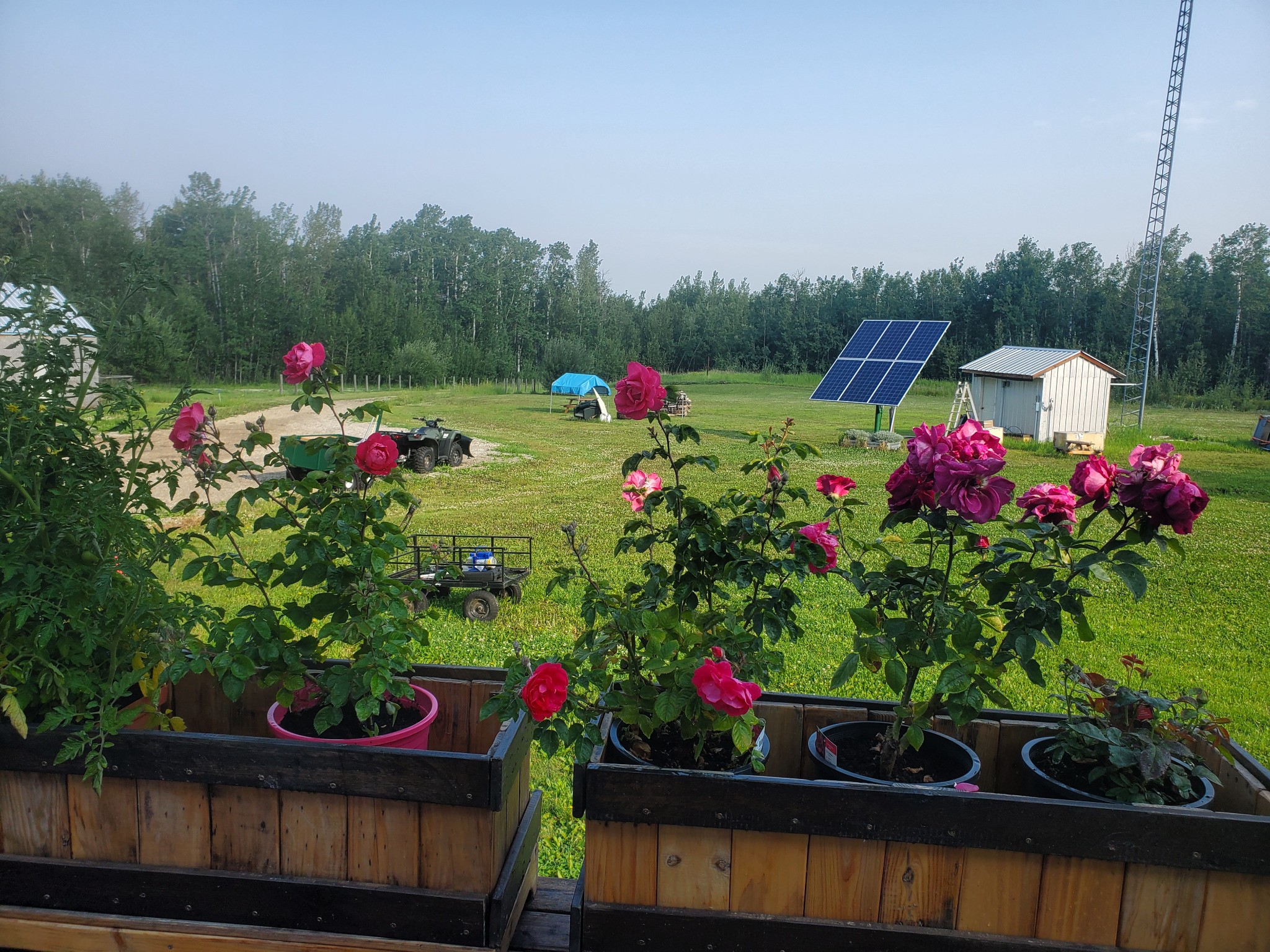
Our off-grid solar array in summer.
What Did We Give Up?
Looking back, surprisingly little. Our first solar system gave us about twenty years of service. We no longer had a conventional monthly electricity bill, although we still needed to budget for maintenance, replacement equipment and generator fuel.
For us, that change in how we paid for power was worthwhile.
Off-grid living does take some attention. You learn a few things, watch how your system performs and occasionally get your hands dirty. I consider that an investment in looking after our home.
The Part That Matters Most
Living off-grid has given us confidence. We have learned to solve problems, understand our limits and ask for help when it is needed. It is a practical kind of independence, built a little at a time.
Still Connected to Everyday Life
We use computers, the internet, telephones and the technology that makes modern life possible. We simply chose a different source for the electricity that runs them.
After more than twenty years, building our own power system remains one of the best decisions we have made.
You Can Do It Too
Solarwyse exists partly because I know how complicated this can look from the outside. Panels, batteries, inverters, generators and wiring are a lot to take in at once.
You do not have to become an electrical engineer or do every part of the installation yourself. You need a suitable design, a willingness to learn and the right people to help with the work.
We live with our own power, well water and on-site sewage system. That experience shapes the guidance we give: practical help so you can understand your choices and feel more confident looking after your own home.
Questions are welcome
You don’t need every answer before you begin.
You don’t have to be buying solar to ask a question. Understanding builds confidence. Advice is free.

 SOLARWYSESolar Power Solutions